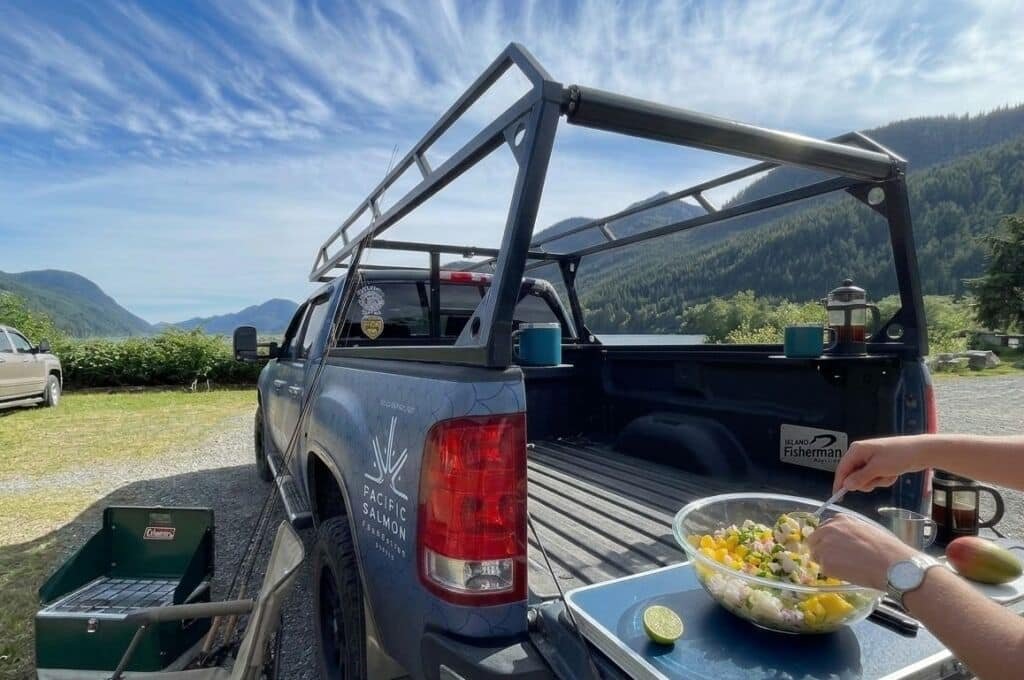

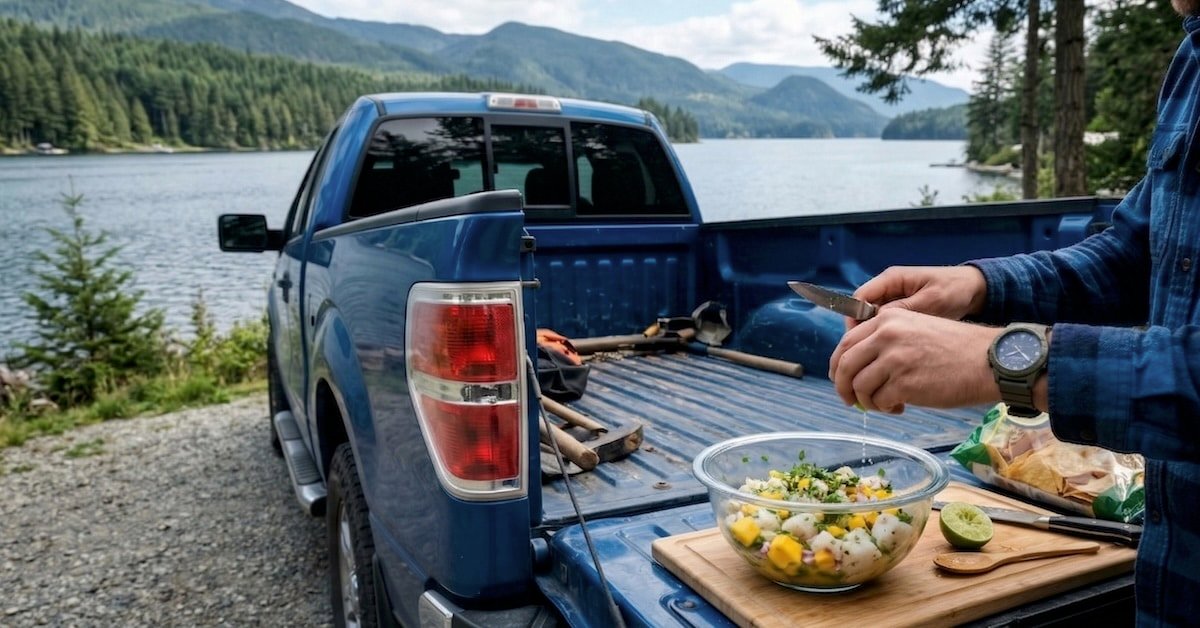
If you are looking for a Halibut Ceviche Recipe that is dead simple, requires zero cooking, and won’t make you the least popular person in a shared tent, you’ve come to the right place. Let’s be honest for a second. We’ve all been on those camping trips where there’s always that one guy. You know the one—he spends three days at home prepping a 14-ingredient marinade, packs a portable sous-vide machine to the lake, and treats the tailgate of his truck like a Michelin-star kitchen.
Listen, I appreciate the effort, but when I’m lakeside or at a cabin after a long day of fly fishing, the last thing I want to do is wash a mountain of dishes or wait four hours for a “reduction” to thicken. I want a Halibut Ceviche Recipe that tastes like a million bucks, requires zero cleanup, and—let’s be real—won’t leave the whole group feeling bloated and “musical” in their sleeping bags later that night.
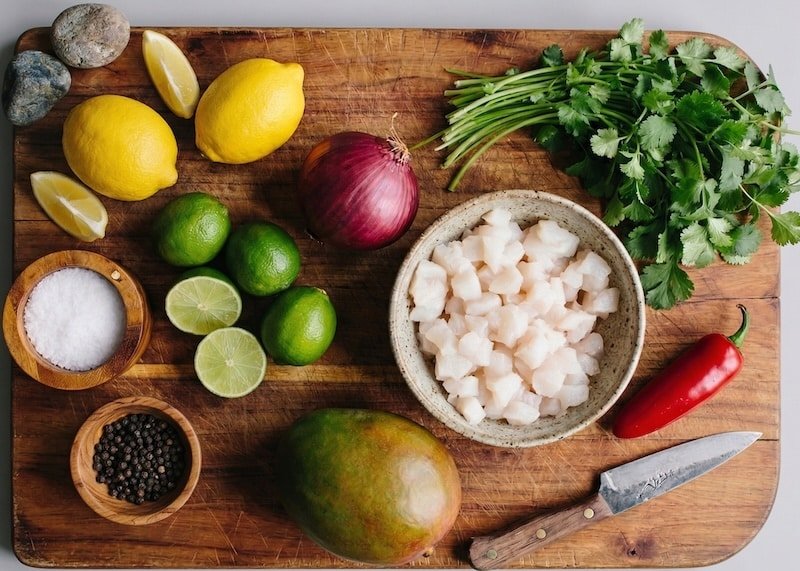
Everything you need for the ultimate Halibut Ceviche Recipe, ready for the tailgate.
Why This is the Ultimate Camping Recipe
I was recently at the Cutthroat Camp in Powell River for a gathering at the lake. Everyone brought something amazing to the table, and while there were some impressive spreads that were unforgettable, this Halibut Ceviche was a massive hit. When you’re out in the bush, simplicity is king. I’ve had the attending people ask me for the recipe since then, so I figured it was time to put it on paper for Island Fisherman once and for all.
To be honest, I have a bit of a confession to make. My family has been eating this exact dish for years, and it completely slipped my mind to share it with the rest of you. It’s one of those “secret weapons” we just take for granted. But seeing the reaction at the lake in Powell River reminded me why it’s so special.
When you get that first perfect bite—the cold halibut, the hit of lemon, and the sweetness of the mango—it’s a physical experience. I’ve seen grown men pound their fist on the table and mutter a muffled “oh my god” because they can’t believe something this good is that simple. It’s not just food; it’s a campsite legend in the making.
The beauty of this Halibut Ceviche Recipe is that it relies on the quality of the fish rather than the complexity of the prep. Here is why this dish wins every time:
-
- Zero Mess: One bowl. One knife. No stove. That’s it. You aren’t scrubbing carbon off a cast iron pan at 10 PM.
- Pure Protein: It’s nutritional gold—fresh fish and fruit. It keeps you energized without that “heavy” feeling of fried food when you’re trying to hike back to the truck.
- The “No-Fart” Factor: We’ve all been there—the “camping gas” from heavy chili or greasy burgers. This dish is incredibly light on the stomach. Your tent-mates will literally thank you.
- Island Pride: As a Vancouver Island local, there is nothing better than showing off a fresh halibut haul. Just make sure you are up to date on the latest DFO fishing regulations before you head out.
If you want to be the person everyone is talking about for the rest of the trip, this is how you do it.
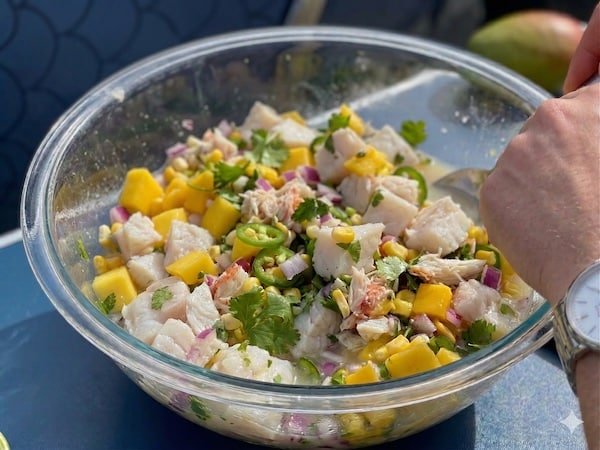
Dead Simple Halibut Ceviche
Ingredients
Equipment
Method
- The Citrus Bath: Toss your cubed halibut into your bowl. Pour in the lemon and lime juice until the fish is mostly submerged.
- The Wait: Cover the bowl and let it sit for 4 to 5 hours. The acid "cooks" the fish until it turns opaque and firm. Go grab a beer or hit the lake for the evening hatch while the chemistry happens.
- The Mix: Once the fish is firm, toss in your diced mango, red onion, jalapeños, and cilantro.
- Seasoning: Add your salt and pepper. Give it a stir and a taste. If it doesn't "pop," add a bit more salt.
- The Finish: If you’ve got avocados, fold them in gently right before you serve. If you add them too early, they turn to mush and ruin the look.
- Serve: Grab a bag of sturdy tortilla chips like Tostitos Scoops! and watch it disappear.
Nutrition
Notes
Tried this recipe?
Let us know how it was!Pro Tips for a Better Halibut Ceviche Recipe
Because we’re fishing on the West Coast, we’re spoiled for choice. But remember: Quality is everything. If you’re using halibut you caught off the coast of Vancouver Island, you’re already 90% of the way to a five-star meal. When cubing your fish, try to keep the pieces uniform—about half an inch square. This ensures the citrus “cooks” the fish evenly all the way through.
The biggest mistake people make with any Halibut Ceviche Recipe is the citrus ratio. Most recipes suggest a 50/50 split on lemon and lime. I don’t. Go heavy on the lemon. Lime juice can turn bitter if it sits for more than a few hours, especially in a cooler. Lemon keeps the flavour bright and clean without that bitter “after-bite” that can ruin a good batch of fish.
Handling the Heat and Sweet
The addition of mango isn’t just for show. The sweetness of the mango perfectly offsets the acidity of the citrus and the heat of the jalapeños. If you like it hot, keep the seeds in the peppers. If you’re feeding a crowd with sensitive palates, scrape them out. And whatever you do, don’t forget the salt. Salt is the engine that makes all these disparate flavours move together. Taste it, then add a pinch more than you think you need.
Is This Recipe Actually Healthy?
Absolutely. Outside of the chips you use to shovel it into your mouth, this is one of the cleanest meals you can eat. It’s high in Omega-3 fatty acids, packed with Vitamin C from the citrus, and contains zero processed junk or heavy oils. It’s the perfect “reset” meal after a few days of eating typical campfire food like hot dogs and beans. Plus, the easy cleanup means more time fishing and less time scrubbing pots by headlamp.
Next time you’re heading to the lake, anchoring in a bay on your boat, or just hanging out at the cabin, skip the complicated prep work. Bring a bag of lemons, a sharp knife, and a fresh fillet. Follow this recipe and let the fish do the talking. You’ll be the legend of the camp before the first chip hits the bowl.
Halibut Ceviche Recipe: Frequently Asked Questions
I get a lot of questions about this recipe when I’m out on the water or at the boat launch. Here are the common ones to help you nail this Halibut Ceviche Recipe on your first try.
Can I use frozen halibut for this recipe?
Absolutely. In fact, many pros recommend using previously frozen fish for any raw application like a Halibut Ceviche Recipe to ensure food safety. Just make sure you thaw it slowly in the fridge—not on the counter—so the texture stays firm and doesn’t get mushy. I usually let it thaw a bit from the freezer for a morning fish, then return for the cubing and soaking. It’s so much easer to cut into nice cubes when it’s a little frozen. Then, back out for a few hours for fun while it marinates/ “cooks”.
How long does halibut ceviche last in the cooler?
Ceviche is best eaten the day it’s made. However, because we use a heavy lemon-based marinade, it will stay “good” in a cold cooler for about 24 hours. The texture will change over time as the acid continues to break down the proteins, so if you wait too long, the fish can become a bit tough. My advice? Make exactly what you think you’ll eat that night.
What if I don’t have mangoes?
While mango is my “secret weapon” for this Halibut Ceviche Recipe, you can swap it for fresh pineapple or even peaches if you’re in a pinch. I’ve even used peach cups in pear juice before. The goal is to have a sweet, tropical counter-punch to the acidity of the citrus and the heat of the peppers. If you prefer a more savoury version, you can leave the fruit out entirely and add a few extra diced tomatoes.
Do I really need that much lemon?
Yes. The most common mistake with any Halibut Ceviche Recipe is skimping on the citrus. The fish needs to be submerged to “cook” properly. If you don’t use enough juice, you’ll end up with raw fish in the middle and a very unhappy group of campers the next morning. When in doubt, buy an extra bag of lemons.