

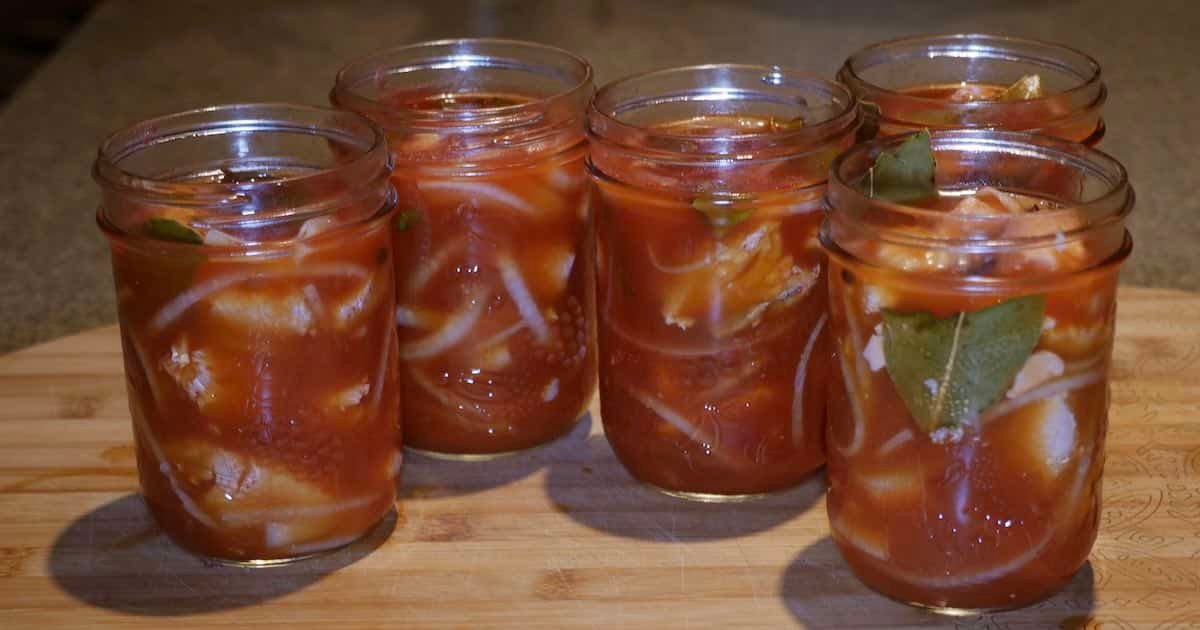
While vacationing in Tofino a few years back, we had a meal at the Wolf in the Fog. My wife, being a bit of a connoisseur, ordered her favorite, a Caesar. Low and behold this was no ordinary Caesar. No, it did not come with a stack of veggies and a hamburger, nor bacon and onion rings. It came with strip of pickled salmon. “What is this strange magic?!” I belted out.
Ever since, I’ve been in the pursuit of the perfect salmon pickling recipe. I’d like to think that I’ve nailed it, but there are so many subtle differences that can be used in such a drop-dead easy recipe that my search for the one recipe to rule them all is not quite over, and maybe never will be. But if you are game for trying this version, I promise you this—you won’t be disappointed.
Warning: If you’ve never made pickled salmon before, you are going to kick yourself. It’s got to be one of easiest, crowd pleasing recipes you’ll ever make. It will turn salmon snobs into salmon beggars. It will move mountains. Before you know it, cats and dogs will be sleeping together. It’s just that good.
What I have learned is there are usually polarized camps when it comes to the process and ingredients:
A) Blanch the salmon or don’t
B) With ketchup or without
C) White vinegar or apple cider vinegar
D) Standard pickling spices or hand select spices
One thing that all pickled salmon recipes seem to agree on is you should jar them with onions, but that doesn’t mean they agree on the type—red, sweet or white. Choices, choices …
Ready? Here we go!
Ingredients
Equipment
Method
- In a large pot, bring water to a boil.
- Blanch the salmon so it firms up. I find that 2 to 3 min is good; some people opt to boil it for longer, while others don’t boil it at all. Remove the salmon and dry it well on paper towel.
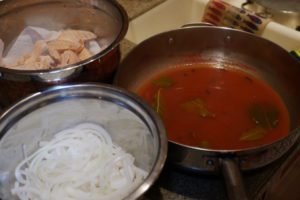
- Prep the onions, the salmon, and the pan with your sauce.

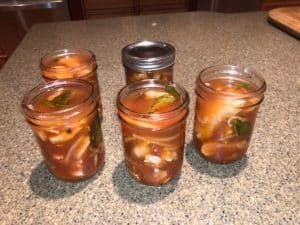
- Layer the salmon and onions in the mason jars, being careful not to pack too tight. Be sure to leave room for liquid.
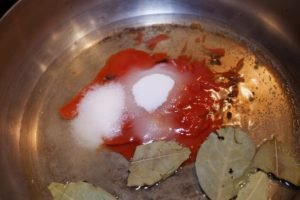
- In a large saucepan bring the water, ketchup, vinegar, sugar, salt, peppercorns, bay leaves, and cloves to a boil.
- Carefully pour the mixture into the jars, ensuring all contents are covered. Note: If you run low of the mixture you can top up with a little water, or just make more.
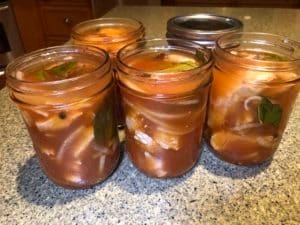
- Rest the jars until they are room temperature. Seal the jars and refrigerate for 4 days.
Nutrition
Notes
Tried this recipe?
Let us know how it was!Got a recipe you’d like to see featured? Prizes could be involved! Click here.